There are a lot of promises being made in the AI outreach space right now.
Book more meetings. Fill your pipeline. 10x your results without lifting a finger. Most platforms repeat some version of this, and most buyers learn the hard way that the pitch and the product are two very different things.
The real question is not which tool sends the most messages. The real question is which tool sends messages people actually want to reply to.
This guide gives you a straight answer. You will get an honest breakdown of the six most-used LinkedIn AI outreach tools on the market, what each one does well, where each one falls short, and a clear framework for choosing the right one based on your actual situation, not a feature checklist.
Already know what you’re looking for? Start your free SendCopy.ai trial here — no credit card needed, first campaign live in under 10 minutes.
Why AI Outreach Tools Are Growing So Fast
Three things happened at the same time that pushed this category into mainstream adoption.
First, AI writing quality crossed a real threshold. The gap between a human-written message and a well-prompted AI-assisted message got narrow enough that, when used correctly, the two became almost indistinguishable.
Second, sales teams got smaller while pipeline targets stayed the same or grew. SDRs, founders, and agencies needed to reach more people with fewer hands. Automation stopped being optional for a lot of teams.
Third, inboxes got harder. Email deliverability dropped as spam filters improved. LinkedIn became the most reliable B2B channel for direct outreach. And the teams using AI to personalize at scale started pulling ahead of the ones still sending bulk templates one by one.
The result is a fast-growing category with a lot of tools competing for the same buyers – and meaningful differences between them that are not obvious from a features page.
What Separates a Good AI Outreach Platform from a Forgettable One
Before comparing tools, it helps to know what to look for. Not all platforms are solving the same problem.
Personalization depth: The weakest tools personalize at the surface: first name, company name, job title. That is a mail merge, not AI personalization. The stronger platforms adapt tone, framing, and message structure based on ICP segment, role, and industry context. The best ones produce output that reads like a real person researched the prospect.
Account safety: This matters more than most buyers realize until it is too late. Aggressive automation – too many requests sent too fast, browser extensions touching LinkedIn’s interface, identical messages sent in bulk – triggers LinkedIn restrictions. A platform with safety built into its architecture protects your account over the long run. A platform that treats safety as a footnote will cost you your pipeline eventually.
Sequence logic: Single-touch outreach does not work. Platforms that guide you through proven multi-step logic (profile view before the connection request, value message before the ask) produce better results than platforms that let you blast one-shot messages and leave the structure entirely up to you.
Unified reply management: When outreach scales across multiple senders, conversations multiply fast. Without a centralized inbox, warm leads get missed, and follow-ups get dropped. This is one of the most underrated criteria in the category.
Honest analytics: Vanity metrics – messages sent, open rates – do not tell you what is actually working. Reply rate, positive reply rate, and meeting conversion do. Platforms that surface the right numbers help you improve. The others just make you feel busy.
Keep these in mind as you read through the comparison below.
Honest Comparison: The 6 Leading AI Outreach Tools in 2026
1. HeyReach
HeyReach was built for agencies and sales teams managing LinkedIn outreach across multiple accounts. Its pricing model charges per LinkedIn sender rather than per user, starting at $79 per sender per month or $199 per month for unlimited senders. That structure becomes compelling once you are running five or more accounts at the same time.
The platform includes a unified inbox, native integrations with HubSpot, Pipedrive, Clay, and Zapier, and built-in sender rotation to keep each account safely under LinkedIn’s weekly limits.
The honest gap: HeyReach is LinkedIn-only. Email outreach requires a separate tool. AI personalization is also fairly basic – the platform automates the sending well, but does not deeply adapt message content per segment.
Best for: Agencies running high-volume LinkedIn campaigns across multiple client accounts.
2. Expandi
Expandi combines LinkedIn outreach with email follow-up sequences in one campaign builder. It supports dynamic personalization through custom variables, images, and GIFs, and its smart sequences adapt based on how prospects behave in the flow. Pricing is $99 per seat per month.
The drawbacks are real. The interface is complex enough that new users often need a week just to get oriented. At scale, messages still read like templates without significant manual effort across message variants. Several users in recent reviews reported account restrictions despite following Expandi’s recommended limits.
Best for: Mid-sized teams that need LinkedIn and email in one workflow and have the runway to work through a steeper setup.
3. Waalaxy
Waalaxy is the most accessible entry point in this comparison. It targets solo operators and small teams who want a quick start on LinkedIn automation, with a Chrome extension that combines LinkedIn messaging and basic email outreach for $59 per month.
Setup is fast, and the pre-built sequences reduce time to first campaign. The tradeoffs are significant, though. Running through a Chrome extension carries a higher account restriction risk compared to cloud-based tools. The unified inbox is a paid add-on, not included in base plans. Users also report billing issues and slow support response times fairly consistently in recent reviews.
Best for: Individuals testing LinkedIn outreach for the first time on a limited budget.
4. We-Connect.io
We-Connect is a cloud-based LinkedIn automation tool priced at $69 to $79 per seat per month. It includes smart sequences, A/B testing, voice notes, CRM integrations via Zapier, and an AI Assist feature that generates personalized connection requests based on a prospect’s LinkedIn profile.
The interface is clean, and onboarding is light. Most users have their first campaign running within a day, which is a genuine advantage for teams that do not want a long ramp-up period.
Where it falls short: the platform can run slowly, and bugs get reported periodically. Analytics stay fairly basic, and there is no true unified inbox for teams managing multiple accounts. Support is limited to Monday through Friday.
Best for: Solo founders and small teams who want affordable, cloud-based LinkedIn automation without a steep learning curve.
5. Dripify
Dripify’s visual drag-and-drop campaign builder makes it one of the most approachable tools in the category. Multi-step sequences combining profile visits, connection requests, messages, and follow-ups are easy to configure. Pricing starts at $59 per month per seat.
The per-seat model is where the cost adds up fast for teams. Each LinkedIn profile requires a separate subscription, so agencies managing multiple accounts pay for multiple licenses. There is no shared inbox, no role-based permissions, and no centralized team management. Personalization depth is also a recurring complaint – the tool handles the mechanics well, but does not help messages sound genuinely tailored.
Best for: Individual contributors running straightforward LinkedIn campaigns who want an intuitive interface without a long setup process.
6. SendCopy.ai
SendCopy.ai is built around a different idea than most tools in this list.
Where the others optimize primarily for reach or simplicity, SendCopy.ai is built around a single principle: outreach should scale without starting to feel automated. That shows up in every part of how the platform works – from how campaigns are structured to how accounts are protected to how replies are managed at team scale.
More on this in the next section.
Best for: Sales teams, agencies, and founders who treat LinkedIn as a primary revenue channel and need AI personalization that actually adapts, safe scaling that does not burn through accounts, and a platform that stays manageable as outreach grows.
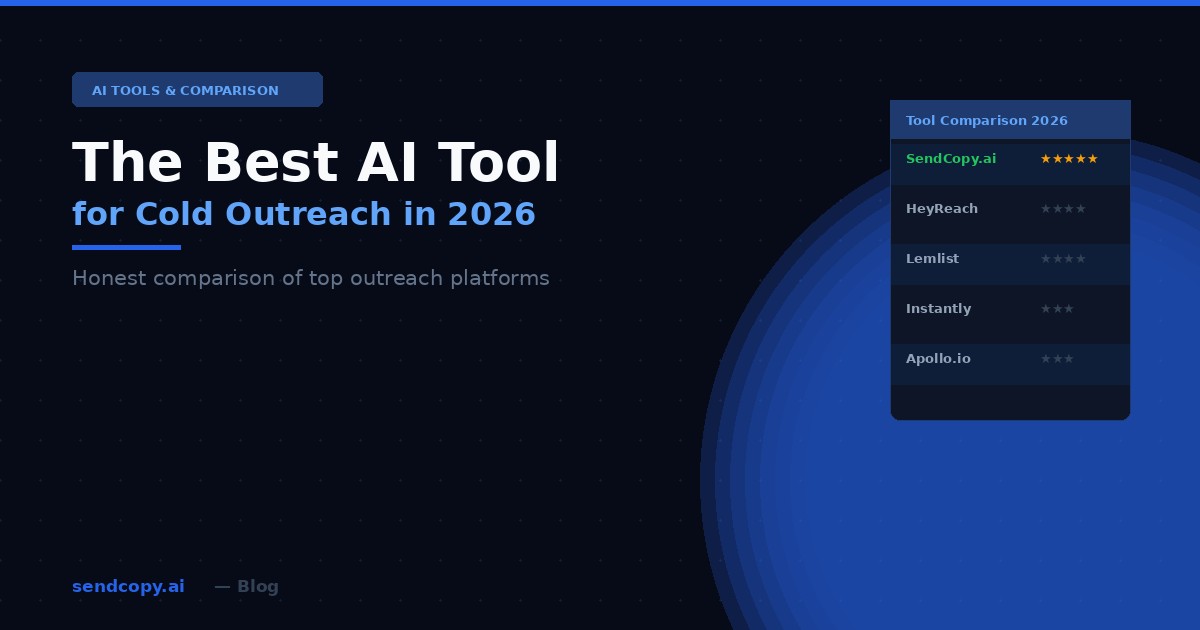
Quick Comparison at a Glance
| Tool | Best For | Starting Price | Unified Inbox | Cloud-Based | AI Personalization |
| HeyReach | Agencies, multi-account scale | $79/sender/mo | Yes | Yes | Basic |
| Expandi | Omnichannel teams | $99/seat/mo | Limited | Yes | Variable-based |
| Waalaxy | Beginners, solo users | $59/mo | Paid add-on | Partial (Chrome) | Basic |
| We-Connect.io | Solo users, small teams | $69/seat/mo | Basic | Yes | AI Assist |
| Dripify | Individual contributors | $59/seat/mo | Basic | Yes | Variable-based |
| SendCopy.ai | Safe, human-like LinkedIn outreach at scale | Affordable for teams/individuals | Yes, full | Yes | Segment-level AI |
Try SendCopy.ai free for 3 days — no credit card required →
Why Most AI Outreach Still Sounds Robotic
Here is the uncomfortable truth most platforms will not say out loud.
AI made outreach worse for many teams before it made it better. When AI writing tools became widely available, the default response was to use them for speed, generating more messages faster, not better ones at scale. The output sounded exactly like what it was: high-volume content written for no one in particular.
The patterns are easy to spot. “I hope this message finds you well.” “I wanted to reach out and introduce myself.” “We help companies like yours achieve significant results.” Three sentences, zero specificity, immediate delete.
The channel is not broken. The strategy behind it is.
Most teams skip the thinking and go straight to generation. They feed a generic prompt into a writing tool, produce variations of the same template structure, and call it personalization because the name and company fields change. Prospects – especially the senior ones who receive dozens of outreach messages every week – recognize the pattern within the first sentence.
AI outreach personalization works when it is built on a solid foundation. Defined ICP segments. Distinct pain points per segment. AI that adapts tone, framing, and structure based on who is actually receiving the message. The goal is output that reads as if a thoughtful person wrote it for a specific type of buyer, because someone made sure it did.
That is a meaningfully higher bar than most platforms are currently meeting.
That is exactly the problem SendCopy.ai was designed to solve. Here is how it works in practice.
Why SendCopy.ai Stands Out
AI Personalization That Adapts to Your ICP, Not Just Names
SendCopy.ai’s AI personalization works at the segment level. You define your ICP sub-groups. The platform adapts message tone, opening angle, and structure to match each one. A VP of Sales at a 50-person SaaS company gets a message built around her context. A founder at a boutique agency gets something structurally different – because their situations, priorities, and reasons to respond are different.
The result is outreach that reads as relevant, not just addressed to the right person.
See how segment-level AI personalization works in your first campaign →
A Guided Sequence Builder That Gets the Architecture Right
The campaign builder in SendCopy.ai is guided, not blank-canvas. It walks you through proven outreach logic: profile view before the connection request, value message before the soft ask. The structure is sound before you write a single word.
You control the copy. The platform handles the sequencing, timing, and pacing.
Sender Rotation for Real Scale Without Account Risk
Every LinkedIn account has a ceiling of roughly 100 connection requests per week. For growing sales teams and agencies, that is a genuine bottleneck.
Sender rotation in SendCopy.ai distributes outreach across multiple LinkedIn accounts simultaneously. A team of three runs at the effective reach of eight or nine accounts without any single profile being pushed past its safe limit. More conversations, same team, no restrictions from overloading one sender.
LinkedIn Account Protection Built Into the Foundation
This is where SendCopy.ai differs from several tools in this comparison in a way that matters long-term.
The platform runs entirely in the cloud with no browser extension required. Every action uses randomized timing that mimics natural human behavior. New accounts ramp up gradually through a structured warm-up process rather than launching at full volume from day one.
Account protection is not a feature added at the end. It is the foundation that the rest of the platform sits on. That means you can run campaigns for months and years without account risk eating into your results.
A Unified Inbox That Keeps Every Conversation Moving
When outreach runs across multiple senders, replies pile up fast. Without a centralized view, warm leads get missed, and follow-ups slow down at exactly the wrong moment.
SendCopy.ai’s unified inbox collects every reply from every sender account in one place. One person manages responses for the whole team, filters by campaign or sender, and keeps every active conversation moving – without switching tabs or hunting through separate accounts.
Analytics That Show What Actually Matters
The analytics dashboard tracks connection acceptance rate, reply rate by sequence step, positive reply rate, and campaign performance over time. When a step underperforms, you see it in real time — not at the end of the month when the damage is already done.
How to Choose the Right AI Outreach Platform
The right tool depends on your channel, your team size, and what you are actually trying to solve.
Choose HeyReach if you run a lead generation agency with five or more LinkedIn sender accounts and need flat-fee multi-account pricing with a strong unified inbox.
Choose Expandi if omnichannel outreach (LinkedIn and email in one workflow) is non-negotiable and you have the time and budget for a more complex setup.
Choose Waalaxy if you are an individual just getting started with LinkedIn automation and want the fastest possible entry point at a low monthly cost.
Choose We-Connect.io if you are a solo founder or small team that wants cloud-based LinkedIn automation at an affordable per-seat price without a long ramp-up period.
Choose Dripify if you are an individual contributor who wants an intuitive visual campaign builder for straightforward LinkedIn-only outreach.
Choose SendCopy.ai if LinkedIn is your primary pipeline channel, you need AI personalization that adapts beyond variable swaps, you want sender rotation and account protection built into the platform from the start, and you need a unified inbox that keeps your team’s conversations manageable as outreach grows.
One more thing worth saying: these tools are not always mutually exclusive. Some teams use HeyReach or We-Connect for LinkedIn volume and pair it with a separate email tool for follow-up sequences. The right combination depends on where your buyers spend their time. If LinkedIn drives the majority of your pipeline, a platform built specifically for human-like LinkedIn outreach will consistently outperform a generalist tool that treats LinkedIn as one channel among many.
If SendCopy.ai sounds like the right fit, the easiest way to know for certain is to try it. Three days, free, no credit card required. Start here →
FAQ
What is the best AI tool for cold outreach on LinkedIn in 2025?
For LinkedIn-first outreach, SendCopy.ai and HeyReach are two of the strongest options available right now. SendCopy.ai has an edge on AI personalization depth, LinkedIn account protection, and a unified inbox for growing teams. HeyReach has an edge on flat-fee multi-account pricing for agencies managing large sender volumes. Both have free trials — testing both against your specific use case is the most reliable way to decide.
Is LinkedIn automation safe to use?
It depends on how the tool is built. Browser extension-based tools carry a higher account restriction risk because they interact directly with LinkedIn’s frontend interface. Cloud-based platforms like SendCopy.ai run outside LinkedIn’s browser environment entirely, using randomized timing that mimics human behavior. Gradual account warm-up and sender rotation add further layers of protection for teams running at scale.
What reply rate should I expect from AI-assisted LinkedIn outreach?
With proper ICP segmentation, a well-structured 5-step sequence, and first messages that open with a question rather than a pitch, reply rates of 20 to 35 percent are realistic. Below 15 percent usually signals a problem with targeting accuracy, message relevance, or follow-up timing – not the channel itself.
How is AI personalization different from a mail merge?
A mail merge inserts fixed variables (name, company, job title) into a template that stays structurally the same for everyone. AI personalization at the segment level adapts the message’s tone, angle, and structure based on the prospect’s role, industry, and context. The output reads differently for different types of buyers because it was built differently for each one, not just addressed differently.
Do I need to warm up a LinkedIn account before running outreach?
Yes. Starting any LinkedIn account at full outreach volume immediately signals bot-like behavior to LinkedIn’s algorithm. A proper warm-up runs at 15 to 20 connection requests per day in week one, increasing gradually over three to four weeks. SendCopy.ai handles this automatically as part of its account protection features – you set your limits, and the platform manages the ramp.
Can solo founders and small teams use these tools effectively?
Yes. For LinkedIn specifically, even a single account running a well-structured 5-step sequence can generate 20 to 40 qualified conversations per month. That is enough to move the needle for most early-stage teams and founders. The key is a well-defined ICP and first messages that read as human.
Still have questions? Our team is available to walk you through your first campaign setup – no sales call required. Start your free trial and reach out directly from the dashboard.
The best AI tool for cold outreach in 2025 is not the one that sends the most messages. It is the one that makes each message worth reading.
Every tool in this comparison is capable in the right hands. The differences come down to depth of personalization, how seriously account safety is taken, whether the platform is built for individual users or growing teams, and whether replies get managed in one place or scattered across separate logins.
If LinkedIn is where your buyers are, and you want outreach that scales without sounding automated, SendCopy.ai was built for exactly that use case.
Try SendCopy.ai free for 3 days. No credit card required. No complicated setup. Your first campaign can be live in under 10 minutes.